
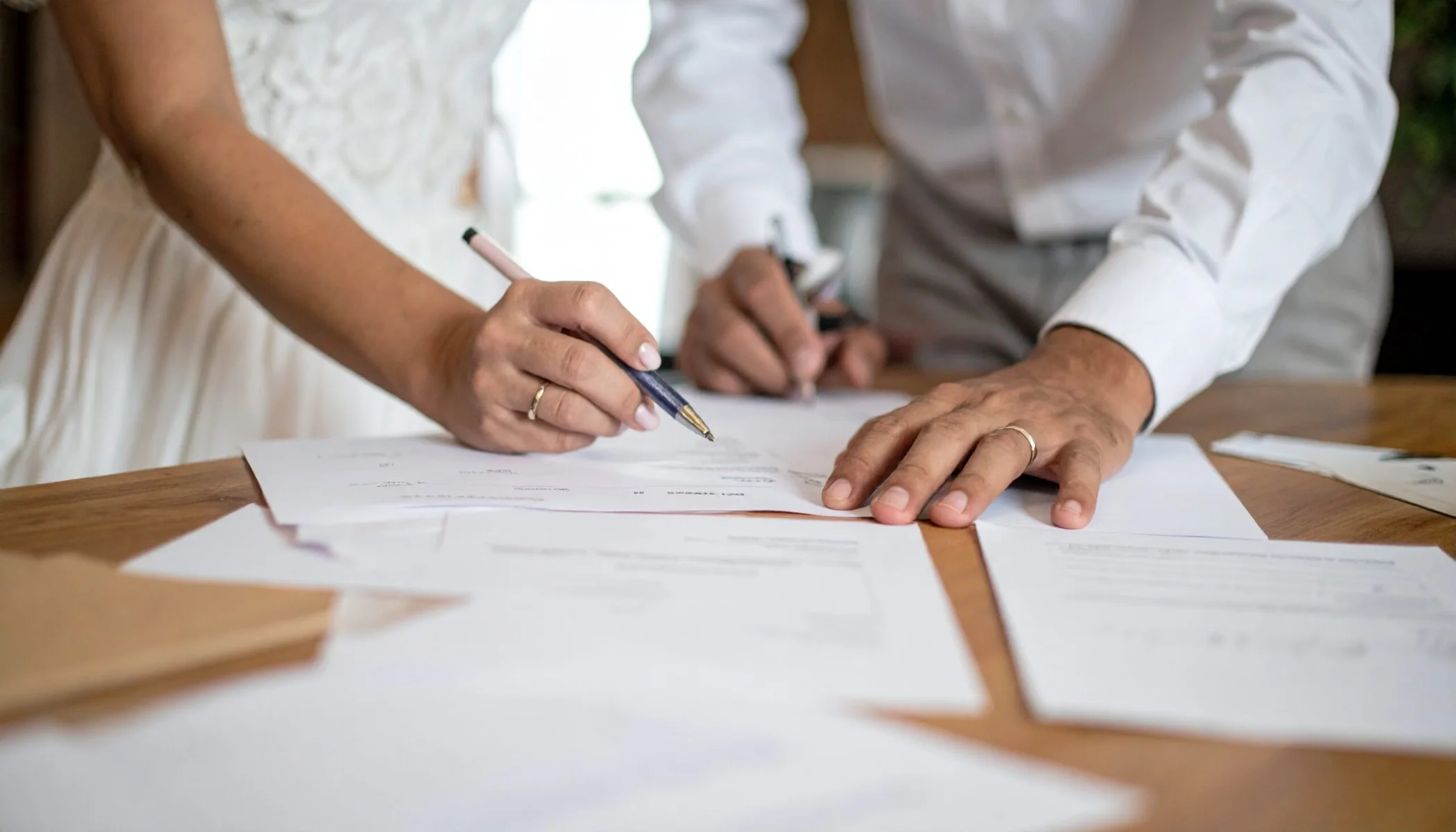
When you picture your wedding day, you picture the details: the flowers, the dress, the light filtering through tall windows, the faces of the people you love. You picture the ceremony, the first dance, the toasts. And then, when the day is over — when the flowers have wilted and the dress is packed away — what remains?
Photographs will always have a place of honour in your memories. But there is something that photographs cannot do: they cannot give back the sound of your partner’s voice as they say their vows. They cannot return the laughter of your closest friends, the music that filled the room, or the way your mother looked at you across a crowded space. Only a wedding film can do that.
Choosing to invest in a wedding videographer is one of the most meaningful decisions you can make in your planning process. And if you are planning a wedding in France — in a château, a domaine, a vineyard, or a manor house — the question of price is one you will inevitably face. What does a good French wedding videographer actually cost? What do you get for your money? And how do you make sure the investment is worth it? This guide will walk you through everything you need to know.
1. Why wedding videography is worth every penny?
Before we talk numbers, it is worth taking a moment to understand what you are actually buying — because wedding videography is one of the most misunderstood items on any wedding budget.
A wedding film is not a recording. It is not a video taken on someone’s phone or a simple document of the day’s events. In the hands of a skilled filmmaker, your wedding film becomes something closer to a short film about the two of you — crafted with intention, shaped by narrative, and built to move you every single time you watch it.
For couples getting married in France, this is especially true. The settings available here — ancient stone châteaux, rolling vineyard estates, lavender fields at golden hour, formal gardens framing centuries-old architecture — are inherently cinematic. They deserve to be filmed by someone who understands how to use that landscape, how to work with the extraordinary quality of French natural light, and how to weave all of those visual elements into a story that feels as grand and intimate as your day truly was.
Wedding videography is, alongside photography, the only truly lasting and tangible record of your day. The day itself passes in a blur — most couples report remembering only fragments of it. Your film gives it back to you in full. Ten years from now, twenty years from now, you will still be able to press play and feel everything you felt in that moment. That is not a luxury. That is a gift you give yourself and the people you love.
2. Understanding the price range: What does a french wedding videographer cost?
Wedding videography pricing varies considerably, and understanding why will help you make a smarter, more confident decision. Here is a breakdown of the main price tiers you will encounter when searching for a wedding videographer in France.
Under €1,500: Proceed with caution
At this price point, you are typically looking at unregistered or amateur videographers — people who may be enthusiastic about filmmaking but who are not yet operating as full professionals. The risks here are significant: there may be no formal contract, no professional insurance, and no guarantee of delivery. Equipment failure, last-minute cancellations, and disappointing results are all genuinely common at this level.
If your budget is truly this limited, it is honestly better to ask a talented friend or family member to film the day than to hire an unregistered amateur. At least you know exactly what you are getting, and there are no expectations to disappoint.
€1,500 to €2,500: Entry-level professional
In this range, you will find videographers who are working professionally but are either early in their career or treating wedding work as a secondary income stream. Their technical skills are generally adequate, and their equipment is usually acceptable — but the films they produce often lack a strong personal voice, a sense of narrative, or the kind of refined visual style that makes a wedding film truly memorable.
For an intimate, low-key wedding, this tier can work perfectly well. But if you are getting married in a stunning French setting and you want that setting to be honoured by the film, you may find yourself underwhelmed by the result.
€2,500 to €3,500: The sweet spot for Qquality and value
This is where the real craft begins. Videographers working in this price range are typically experienced professionals who have developed a genuine aesthetic, limit the number of weddings they take on each year, and approach each project with genuine creative investment.
At this level, you can expect carefully considered cinematography, thoughtful editing, skilled use of music, and a film that genuinely captures the atmosphere and emotion of your day rather than simply documenting it. These are the filmmakers who tend to be featured on wedding blogs, recommended by prestigious venues, and sought after by couples who care deeply about the quality of the final result.
This is the tier where I personally position my work — and it reflects a deliberate choice. By taking on a carefully limited number of weddings each year, I can give every couple the attention, preparation, and creative focus their day deserves.
€3,500 to €10,000 and beyond: High-end and luxury
At the upper end of the market, you are entering the world of luxury wedding filmmaking. Videographers at this level often work with full production teams, multiple camera operators, and complex post-production workflows. Their films can feel genuinely cinematic — closer to the language of arthouse film than to conventional wedding videography.
This tier is particularly relevant for very large or complex weddings, destination events with significant logistical demands, or couples for whom the film is genuinely the top creative priority of the entire event. Many of the videographers working at this level have backgrounds in commercial or feature filmmaking and bring that level of technical sophistication to their wedding work.
3. What are you actually paying for?
When couples see a quote from a professional wedding videographer, the number can sometimes feel surprising. It is worth understanding exactly what goes into that price — because the wedding day itself is only a fraction of the total work involved.
Professional equipment
A working professional wedding videographer has invested heavily in their toolkit. High-end cinema cameras, fast prime lenses, wireless microphone systems, gimbals, drones, backup recording devices, and professional editing workstations — a well-equipped videographer will typically have between €15,000 and €25,000 worth of gear, all of which needs to be maintained, insured, and periodically replaced. The cost of that equipment is reflected in the price you pay.
Preparation and research
A thorough professional does not simply show up on the day. In the weeks leading up to your wedding, they will review the timeline, coordinate with your photographer and other vendors, research the venue, and in some cases visit it in person to understand the light conditions, the architecture, and the best positions for filming. They will speak with you to understand your relationship, your priorities, and the specific moments that matter most to you.
This preparation is invisible on the day — but it is precisely what makes the day run so smoothly.
The wedding day itself
On average, a wedding videographer is present for twelve to fifteen hours on the day itself — from the preparations in the morning through to the dancing in the evening. Throughout that time, they are simultaneously operating cameras, managing audio, making creative decisions in real time, coordinating with other vendors, and remaining completely calm and unobtrusive so that your day feels natural and uninterrupted.
It is genuinely demanding work, both technically and emotionally — and doing it well requires years of experience.
Post-production: Where the magic happens
If the wedding day is the raw material, post-production is where the film is actually made. After your wedding, your videographer will spend between thirty and eighty hours — sometimes more — reviewing all of the footage, selecting the best material, building a narrative structure, colour grading every shot, designing the sound mix, selecting and licensing music, and refining the edit until it is exactly right.
This is the part of the process that most couples never see, and it is where the vast majority of the creative work takes place. A highlights film that feels effortless to watch has almost certainly taken forty or fifty hours to make.
Professional costs and overheads
A legitimate professional pays taxes, social contributions, professional insurance, software licences, website costs, and ongoing training. In France, VAT alone accounts for twenty percent of gross revenue. These costs are real and significant — and they are what allow a professional to operate with the reliability and accountability that you deserve.
When you pay a fair price for professional work, you are not just paying for a film. You are paying for the security of knowing that the person holding the camera on your wedding day is insured, experienced, and fully committed to delivering exactly what they promised.
4. How much should you budget for wedding videography?
A useful rule of thumb used across the wedding industry is to allocate roughly eight to ten percent of your total wedding budget to videography.
For a wedding with a total budget of €30,000, that means setting aside between €2,400 and €3,000. For a €50,000 wedding, you are looking at €4,000 to €5,000. These figures allow you to access genuinely skilled, experienced professionals who will produce work you will be proud of for the rest of your life.
Of course, these are guidelines rather than rules. Some couples choose to prioritise videography above almost everything else — because they know that the dress, the flowers, and the catering will all be beautiful on the day itself, but only the film will give the day back to them forever. Others have tighter overall budgets and need to be more selective. Whatever your situation, approaching the videography budget with the same seriousness you give to the venue or the catering will ensure you get a result that truly reflects the importance of the occasion.
5. Questions to ask before you book
Once you have a shortlist of videographers whose work you admire, the conversation you have with them before booking is just as important as the portfolio you have already watched. Here are the key questions to ask.
How many weddings do you film per year? A videographer who takes on fifty weddings a year cannot give any single couple the attention and creative investment they deserve. The best professionals in the €2,500 to €3,500 range typically work with between ten and twenty couples per year — enough to build deep experience, not so many that the work becomes routine.
What does your package include? Understand exactly what is covered: duration of coverage, number of films delivered (highlights only, or a full-length edit as well), whether drone footage is included, delivery format and timeline.
What is your approach to music? Music is one of the most powerful elements of any wedding film. Ask whether the videographer selects the music themselves or involves you in the process — and whether the licences are properly cleared for online sharing.
What happens if something goes wrong? A professional will always have backup equipment, backup storage, and clear contractual terms covering unlikely but important scenarios.
What are your delivery timelines? A realistic turnaround for a professionally edited wedding film is four to eight weeks. Be cautious of anyone promising faster delivery on a complex edit — corners are likely being cut.
6. Why filming in France adds value?
Couples who choose to get married in France — whether they are French themselves or travelling from abroad for a destination wedding — are already choosing a setting of exceptional beauty. The landscapes, the architecture, the food, the light: all of it is extraordinary.
A videographer who knows how to film in France — who understands the particular quality of afternoon light in the Dordogne, or knows how to capture the drama of a Provençal sunset, or feels comfortable working within the formality of a Loire Valley château — brings something genuinely specific and valuable to your day.
Experience filming in French settings means knowing when to move, where to position yourself, how to work with the existing architecture rather than against it, and how to honour the grandeur of the setting while keeping the focus firmly on the human story at the centre of it all.
7. A note on destination weddings and travel costs
If you are booking a videographer who will need to travel to your venue — particularly for international couples planning a wedding in France — it is important to discuss travel costs clearly and early. Most professional videographers charge for travel, accommodation, and associated expenses separately from their main fee, and these costs can add meaningfully to the total.
Be transparent about your venue location from the very first conversation, and ask for a full quote that includes all anticipated costs. A professional will always be happy to give you a complete picture upfront — because surprises are bad for everyone.
8. The emotional return on investment
There is a final consideration that no price guide can fully capture, and it is perhaps the most important one.
Your wedding film is not a product. It is not a service in the conventional sense. It is an emotional document — a record of one of the most significant days of your life, made with care and craft by someone who was genuinely present for it.
The couples who choose not to have their wedding filmed often say, within months of the wedding, that it is one of their greatest regrets. The day passes so quickly, the emotions are so overwhelming, that most people remember only fragments of it clearly. The film fills in everything else. It gives you back the voices, the details, the moments you never even knew you had missed.
In ten years, in twenty, you will sit down with your children — or simply with each other — and press play. And everything will come back. Not as a faded memory, but as a living, breathing record of the day you promised each other everything.
That is worth budgeting for. That is worth getting right.
Conclusion: Invest in the memory, not just the moment
Understanding the price of a good French wedding videographer is ultimately about understanding what you are investing in. You are not paying for someone to point a camera at your wedding. You are investing in the only version of your wedding day that will last forever — one that captures not just what happened, but how it felt.
Choose a professional who works within a price range that reflects genuine skill and experience. Take the time to watch their films, speak with them, and make sure their sensibility matches yours. Budget for this properly, as you would for any other essential element of your day.
And then trust them — because the best wedding films are made by people who care deeply about their craft, who show up prepared and present, and who are genuinely honoured to be part of your story.
Your wedding deserves a film as beautiful as the day itself. Make sure it gets one.

